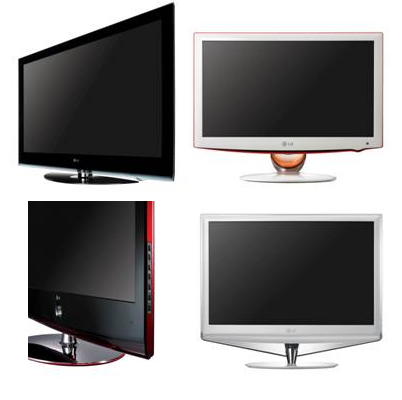
What Is The Difference Between Plasma And LCD TV?


Question: What is the Difference Between an LCD TV and a Plasma TV?
Answer: Outward appearances are definitely deceiving when it comes to LCD and Plasma televisions. Although both types of televisions are flat and thin, they employ different technology in an attempt to deliver similar results.

Plasma TV Overview

Plasma television technology is based loosely on the fluorescent light bulb. The display itself consists of cells. Within each cell two glass panels are separated by a narrow gap in which neon-xenon gas is injected and sealed in plasma form during the manufacturing process. The gas is electrically charged at specific intervals when the Plasma set is in use. The charged gas then strikes red, green, and blue phosphors, thus creating a television image. Each group of red, green, and blue phosphors is called a pixel (picture element).

Although Plasma television technology eliminate the need for the bulky picture tube and electron beam scanning of traditional televisions, because it still employs the burning of phosphors to generate an image, Plasma televisions still suffer from some of the drawbacks of traditional televisions, such as heat generation and screen-burn of static images.

LCD TV Overview

LCD televisions, on the other hand, use a different technology (see also question #1 for this same explanation).

Basically, LCD panels are made of two layers of transparent material, which are polarized, and are "glued" together. One of the layers is coated with a special polymer that holds the individual liquid crystals. Current is then passed through individual crystals, which allow the crystals to pass or block light to create images. LCD crystals do not produce their own light, so an external light source, such as florescent bulb is needed for the image created by the LCD to become visible to the viewer.

Unlike standard CRT and Plasma televisions, since there are no phosphors that light up, less power is needed for operation and the light source in an LCD television generates less heat than a Plasma or traditional television. Also, because of the nature of LCD technology, there is no radiation emitted from the screen itself.

Plasma vs LCD

The ADVANTAGES of Plasma over LCD are:

1. Larger screen size availability.

2. Better contrast ratio and ability to render deeper blacks.

3. Better color accuracy and saturation.

4. Better motion tracking (little or no motion lag in fast moving images).

The DISADVANTAGES of Plasma vs LCD include:

1. Plasma TVs are more susceptible to burn-in of static images.

2. Plasma TVs generate more heat than LCDs, due to the need to light of phosphors to create the images.

3. Does not perform as well at higher altitudes.

4. Potentially shorter display life span - this used to be the case. Early Plasmas had 30,000 hours or 8 hrs of viewing a day for 9 years, which was less than LCD. However, screen life span has now improved and 60,000 hour life span rating are now common, with some sets rated as high as 100,000 hours, due to technology improvements.

LCD television ADVANTAGES over Plasma include:

1. No burn-in of static images.

2. Cooler running temperature.

3. No high altitude use issues.

4. Increased image brightness over Plasma.

5. Lighter weight (when comparing same screen sizes) than Plasma counterparts.

6. Longer display life used to be a factor, but now LCD and Plasma sets both have at least 60,000 hour or higher lifespans.

DISADVANTAGES of LCD vs Plasma televisions include:

1. Lower contrast ratio, not as good rendering deep blacks.

2. Not as good at tracking motion (fast moving objects may exhibit lag artifacts) - However, this is improving with the recent implementation of 120Hz screen refresh rates and 240Hz processing in higher-end LCD sets.

3. Not as common in large screen sizes above 42-inches as Plasma. However, the number is growing fast, with 46 and 47-inch screen sizes becoming more common, and some LCD sets having a screen size as large as 65-inches also available to the general public.

4. Although LCD televisions do not suffer from burn-in susceptibility, it is possible that individual pixels on an LCD televisions can burn out, causing small, visible, black or white dots to appear on the screen. Individual pixels cannot be repaired, the whole screen would need to be replaced at that point, if the individual pixel burnout becomes annoying to you.

5. LCD televisions are typically more expensive than equivalent-sized Plasma televisions (although this is changing), especially when comparing EDTV Plasmas to HDTV-LCD Televisions.

How To Get To Malapascua Island

Malapascua Island the new Boracay of Cebu. Have you heard about this? Definitely yes for some and no for the many.

This island and surrounding area is right on and off the northern tip of Cebu and off the west coast of Leyte. As it is a 3 hour drive from the capital and the main diving center of
Mactan, it is visited far less. This also means that the diving infrastructure is not so well developed, but is improving.

How to get there?

There are 3 companies which ride to Maya from the North bus station in Cebu: Ceres, Cebu AutoBus and Rough Riders. The journey takes 3 1/2 to 4 hours, video and air con 140 pesos, non air-con 110 pesos you could hire a taxi or a private car from Cebu to Maya.

From Maya a local boat Ferry goes across am and pm with a break at lunch time till 4.30 it take about 1/2 hour cost 40 pesos.

Crossing can be rather wet and bancas have very little shelter from the elements, be prepared on landing to either jump into the shallow waters or walk down a rickety plank depending on the tide. You may have to transfer to a very small banca for the last 200 meters on your way back to Maya.

A private banca can be hired from Maya, the first ferry leaves Malapascua at 6:30. Malapasca can be reached from Bantayan and from Leyte (San Isidero).

What to see there?

Snorkeling and fishing With its spectacular underwater flora and fauna there is much to see, making snorkeling a fine experience. A resort will rent boats, alternatively locals will take you on their fishing rakie. Scuba diving Waters off the island offers some of the most exciting extreme dives in the Philippines with adrenaline pumping adventure thresher sharks and manta ray encounters. The dive shops seem mindful of the environment and has a caring attitude to their customers which is as well considering the kind of fish roaming around. They offer introductory courses to advanced scuba diving and there are a couple of wrecks to explore.

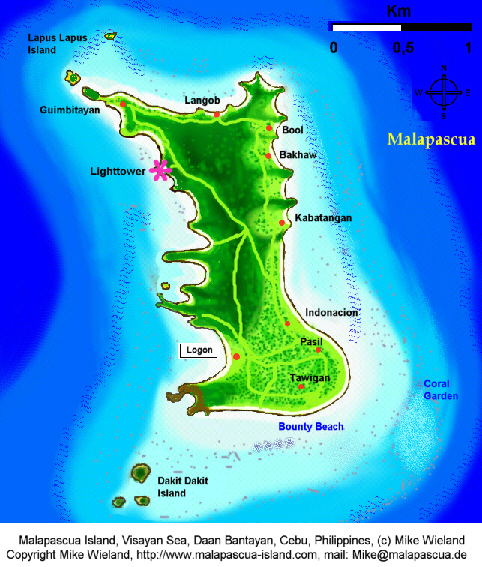
This is the map of island and some photos which is really worth plunging.

The World Revives

And colors renew.

To You my begetter my mom and my life, and this is just to say thank you for everything you've done.

I will always be grateful.

Love you Mom.

My mother is always with me...
She's the whisper of the leaves
as you walk down the street.
She's the smell of bleach
in your freshly laundered socks.
She's the cool hand on your brow
when you're not well.
Your mother lives inside your laughter.
She's crystallized in every tear drop.
She's the place you came from,
your first home...
She's the map you follow
with every step that you take.
She's your first love
and your first heart break...
and nothing on earth can separate you.
Not time, Not space...
Not even death...
will ever separate you
from your mother...
You carry her inside of you...

What's In Your Foot?


Walking is easy. It’s so easy that no one ever has to teach you how to do it. It’s so easy, in fact, that we often pair it with other easy activities—talking, chewing gum—and suggest that if you can’t do both simultaneously, you’re some sort of insensate clod. So you probably think you’ve got this walking thing pretty much nailed. As you stroll around the city, worrying about the economy, or the environment, or your next month’s rent, you might assume that the one thing you don’t need to worry about is the way in which you’re strolling around the city.

But what's in our foot? I found it because of this picture.
I was bowled over before everytime my mom see her reflexologist (reflex: a system of massage used to relieve tension and treat illness, based on the theory that there are reflex points on the feet, hands, and head linked to every part of the body). She was claiming I still remember that everything that the reflexologist press or touch its connected to the organs in our body.

And its 18 days to go and I'm going home I will definitely see a reflexologist and try how it will feel.